Human Factors: Fitness & Decision-Making
Most incidents trace back to people, not machines. As pilot-in-command you must judge your own fitness, manage pressure, and make deliberate decisions.
Check yourself: IM SAFE
You check the aircraft — check the pilot too.
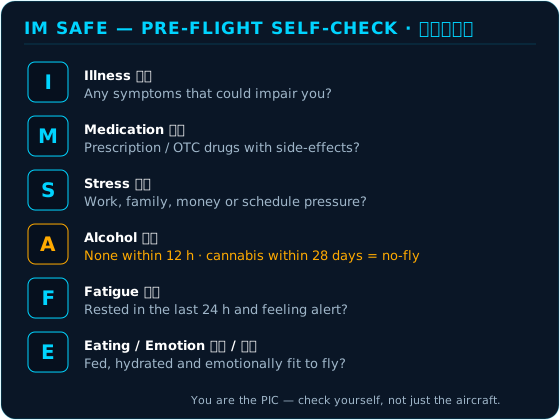
The CARs set hard limits — you must not act as a crew member if you:
- have consumed alcohol within the previous 12 hours, or are under its influence;
- have used cannabis (including CBD) within 28 days;
- are fatigued, or taking medication that impairs you.
The 28-day cannabis abstinence is far longer than people expect, and it includes CBD. Plan around it.
Hazardous attitudes
Recognise these five in yourself and your crew — each has an antidote:
- Anti-authority ("don't tell me") · Impulsivity ("do something now") · Invulnerability ("won't happen to me") · Macho ("I can do it") · Resignation ("what's the point").
Decision-making & pressure
- Maintain situational awareness — keep processing "what ifs" as conditions change.
- Make decisions in advance where you can (e.g. "if I'm not set up by 16:00, we don't fly").
- Recognise perceived pressures — from yourself, family, employers, friends — and don't let them push you past your limits or the aircraft's.
Crew Resource Management (CRM): seek information, state your position clearly, and listen. Any crew member must feel free to flag a safety concern to the PIC.
Check your understanding
Key takeaways
- Run IM SAFE before every operation — you are part of the airworthiness check.
- No alcohol within 12 h; no cannabis within 28 days; no fatigue.
- Name the five hazardous attitudes and counter them.
- Decide in advance, manage pressure, and keep open crew communication.
Sources: RPAS 101 pp.95–106 · CAR 901.xx (crew fitness) · TP‑15263 §3 (Human Factors).